Your Clothes Are Trapped — and the Door Won’t Budge
It is one of the most frustrating moments of laundry day: the washer finished — or maybe it never quite finished — your clothes are sitting right there behind the glass, and the washer door won’t open. You pull the handle and it barely moves. The lock light is glowing (or flashing), and nothing you press seems to change it.
Before you do anything else, hear this: do not force it. A front-load washer door that is locked shut is held by a real mechanical latch, and yanking on the handle can snap the door strike, crack the door frame, or destroy the lock assembly itself — turning a ten-minute wait into a genuine repair bill. Worse, if there is still water in the tub, forcing the door can dump gallons of water across your laundry room floor in seconds.
The good news: when a washing machine door is locked and won’t open, the cause is almost always one of a short list of fixable things — the cycle isn’t truly done, the tub hasn’t drained, the child lock got switched on, or the machine just needs a proper reset. This guide shows you how to unlock a washing machine door safely, in the right order, and tells you exactly when to stop and call a pro here in Abilene.
First Question: Is It Safe to Open the Door Right Now?
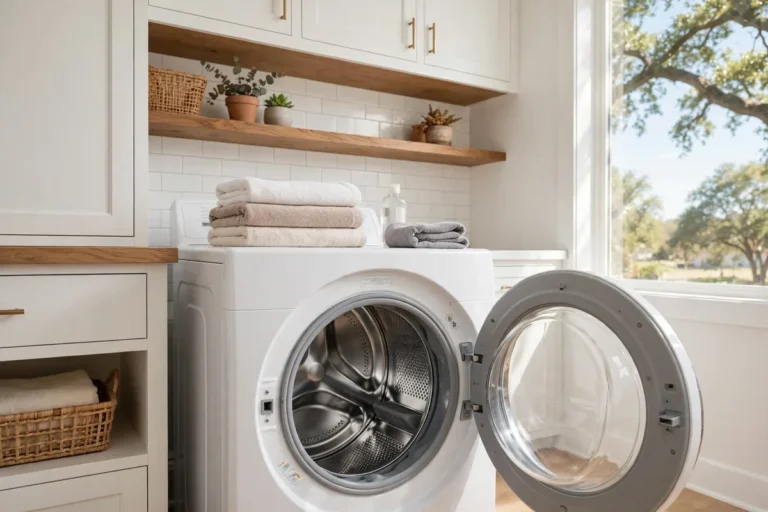
Before trying any fix, look through the glass and check the water level. This is a safety call, not just a convenience one.
If you can see water standing in the tub — especially if it reaches the bottom edge of the door glass — the door needs to stay shut for now. Front-loaders seal the door with a rubber boot, and gravity does the rest: open the door with water sitting above its lower edge and the water comes out with it. A full tub can hold several gallons, and it will not politely stay inside the machine.
Do NOT tip the machine to drain the water or reach the clothes. Tipping a washer full of water can flood the control board and motor compartment, slosh water into electrical components, and the machine is dramatically heavier than it looks once it’s loaded with water-soaked laundry. Tipping is also how backs get hurt and floors get ruined. There are far better ways to get the water out — you’ll find them below.
If the tub looks empty and the door simply won’t release, you’re dealing with a lock or control issue, and every step below is safe to try.
How to Unlock a Washing Machine Door: The Safe Steps, in Order
When a washer door lock is stuck, work through these steps in order. Each one is safe, and most locked doors open somewhere in this list.
Step 1: Wait — the cycle may not be truly finished
Modern front-loaders keep the door locked for a short time after the cycle ends. The lock assembly on most machines uses a wax motor or a bi-metal element that needs a minute or two to cool down and release — that click you eventually hear is the lock physically disengaging. Give the machine a full five minutes after everything stops before you decide the door is genuinely stuck. If you paused the machine mid-cycle, it may also need to complete a drain or spin phase before it will release the door.
Step 2: Run a Drain/Spin cycle
If there is any water in the tub — or you’re not sure — select Drain/Spin (labeled ‘Drain and Spin’ or just ‘Spin’ on some models) and run it. The washer pumps the water out, and once the level drops and the pressure switch confirms the tub is empty, the control board releases the lock a minute or two after the cycle ends. This one step resolves an enormous share of ‘washer door won’t open’ calls, because the door was never broken — it was doing its job, holding back water.
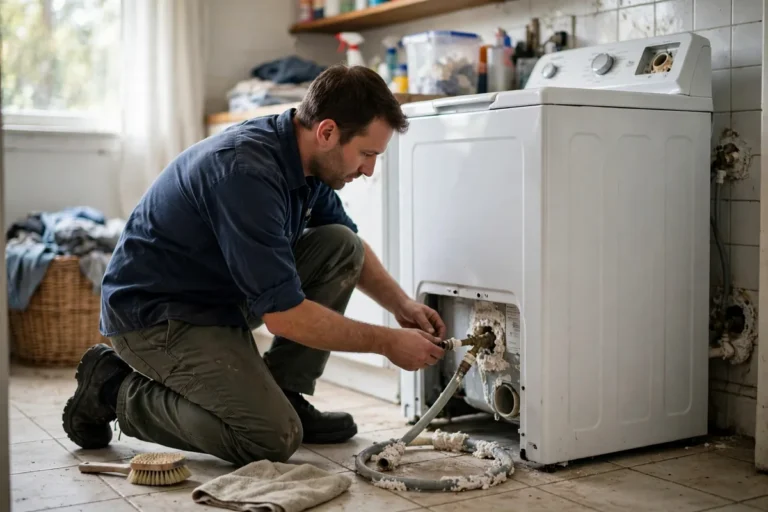
If the machine hums but the water doesn’t move, or the cycle ends with water still standing, you’re looking at a drain problem rather than a lock problem. Clean the drain pump filter — the small access door at the bottom front of most front-loaders hides it — keeping towels and a shallow pan handy, because water will come out when you open it. Then run Drain/Spin again. Our washer not draining guide walks through the full filter cleaning and drain checks, and manufacturer care guides like Whirlpool’s step-by-step washer cleaning guide cover the same routine.
Step 3: Check the child lock
A surprising number of ‘front load washer door won’t open’ mysteries turn out to be the child lock. When it’s engaged, the door stays locked and the panel buttons won’t respond. Look for a CL code, a padlock icon, or the words ‘Child Lock’ on the display. To switch it off, press and hold the child-lock button — or the two buttons marked with the child-lock symbol — for about three seconds, until the indicator clears. The exact buttons vary by brand, so check your owner’s manual if the panel isn’t clearly labeled. Our list of common washer error codes explains the CL code and what to try if it won’t clear.
Step 4: Power-reset the washer
If the door is still locked with an empty tub and no child lock in sight, give the control board a clean restart: unplug the washer — don’t just press the power button — wait a full five minutes so the board fully discharges, then plug it back in. A proper power-cycle clears the electronic glitches that can leave a lock engaged; a brief power flicker, the kind Abilene storm season delivers regularly, is a classic trigger. After plugging back in, wait a minute and try the door. If the panel shows a door error code (dE, DE, dL, or similar), write it down — that code tells a technician exactly which part of the lock circuit is complaining.
Step 5: Try the manual release (last resort before calling)
Many front-load washers include a manual door release — usually a small pull tab, cord, or lever tucked near the drain pump filter behind the bottom-front access door. Pulling it disengages the lock mechanically. The location genuinely varies by brand and model, and on some machines it’s only reachable after removing a panel, so check your owner’s manual for your specific machine and never force anything you can’t clearly identify. If you can’t find a release, or the release doesn’t free the door, the lock assembly itself has most likely failed — and that’s a repair, not a DIY project.
Why the Door Stays Locked: What’s Actually Going Wrong
A washer door won’t unlock in Abilene, TX for only a handful of reasons. Understanding which one you’re dealing with keeps you from wasting time — or breaking something.
The tub didn’t drain
This is the number-one cause, and it’s actually the machine protecting you. The control board watches the water level through a pressure switch; if water is still in the tub, it keeps the door locked on purpose. A clogged drain pump filter, a kinked drain hose, or a failing drain pump can all leave water standing after the cycle ‘ends.’ If your washer finishes but the tub is wet or there’s standing water, treat it as a drain issue first — our washer not draining guide covers the checks in detail.
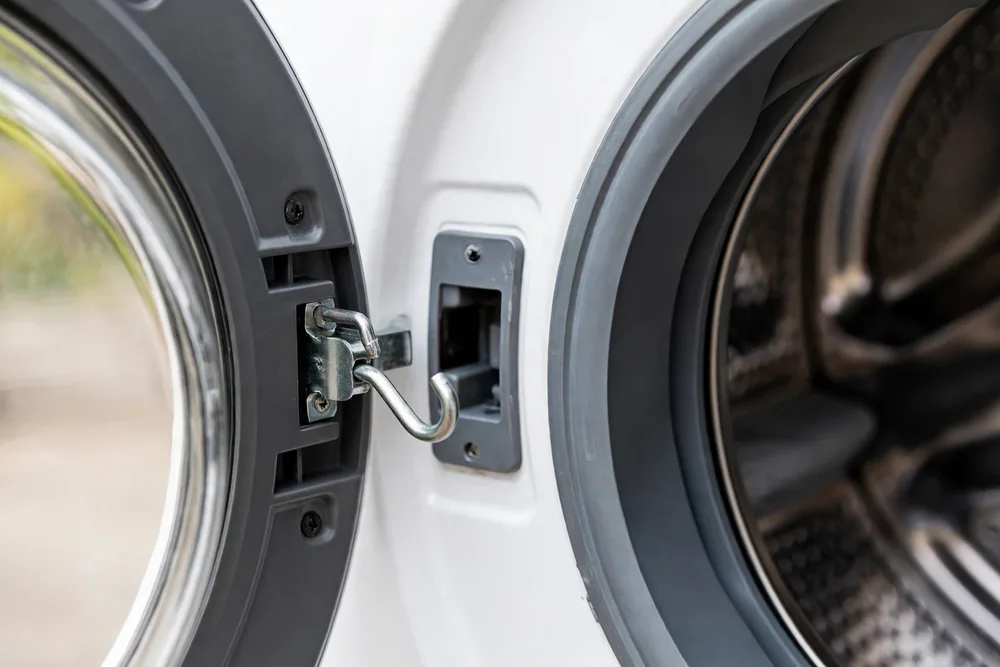
The door lock assembly failed
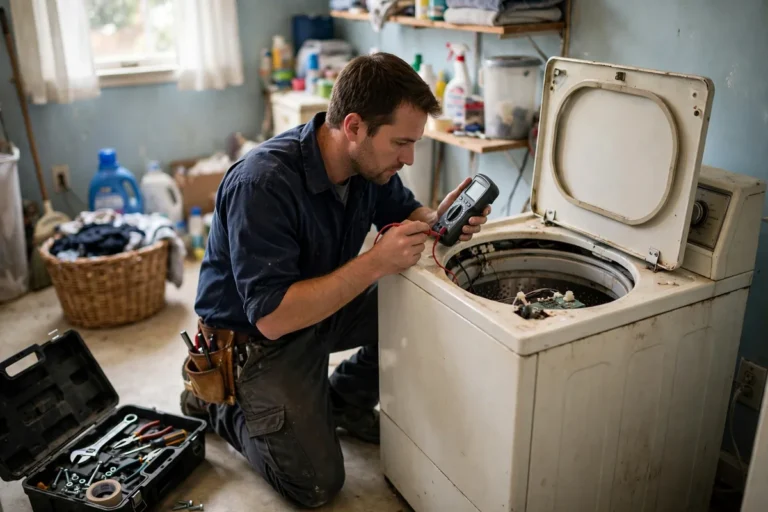
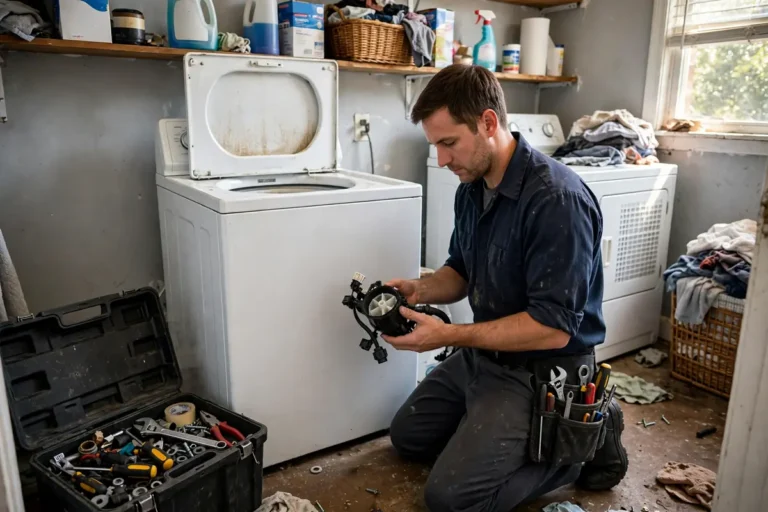
The door lock assembly is an electromechanical part: an actuator (often a wax motor or solenoid) drives a latch, and a switch confirms to the board that the door is locked. When the actuator wears out, the latch jams, or the internal switch fails, the lock either won’t engage (so the washer won’t start) or won’t release (so the door won’t open). A lock that clicks repeatedly, buzzes, or throws a door error code is waving a red flag. On the bench, a technician tests the lock with a meter — if the actuator doesn’t move or the switch doesn’t change state, the assembly gets replaced.
The control board isn’t sending — or releasing — the signal
Sometimes the lock is fine but the board is the problem: a stuck relay, a failed lock-drive circuit, or scrambled logic after a power surge can leave the lock energized indefinitely. Board failures are less common than lock or drain failures, but they’re real — and they’re the reason ‘just replace the lock’ isn’t always the answer. A proper diagnosis tests the lock first and only points at the board when the lock proves good.
Child lock was left on
Worth repeating because it’s so common: if anyone in the house leaned on the panel or a curious kid went button-mashing, the child lock may be on. CL on the display plus a dead panel plus a locked door is the classic trio. Three-second hold to clear it, as described above.
The door strike or handle mechanism broke
The door carries a plastic or metal hook — the strike — that engages the lock. If someone forced the door in the past (or the strike simply fatigued with age), the hook can snap or bend, and then the door either won’t latch or won’t release cleanly. A handle that feels loose, floppy, or ‘different’ than usual usually means the mechanical side needs attention.
What NOT to Do When the Washer Door Won’t Open
Almost every expensive version of this problem starts with one of these mistakes:
- Don’t force the handle. Yanking a locked door snaps the door strike, cracks the door frame or hinge mounts, and can destroy a lock assembly that was otherwise fine. A short wait becomes a parts-and-labor repair.
- Don’t tip a full machine. Water reaches the control board, motor, and wiring when a washer goes sideways — and a water-loaded washer can weigh several hundred pounds. Flooded electronics plus a back injury is the worst possible outcome here.
- Don’t poke tools into the latch. Screwdrivers and knives around the door latch gouge the door boot seal (hello, future leaks), scar the front panel, and can shatter the door glass. The latch area is not a puzzle to pick.
- Don’t keep running cycles hoping it ‘fixes itself.’ If the pump is blocked, more cycles just churn the same standing water. Diagnose the drain instead.
- Don’t bypass or hot-wire the lock. The door lock is a safety device, and its wiring carries live voltage. Bypassing it to run the washer with an unsecured door is dangerous, full stop.
Quick Brand Notes: LG, Samsung, Whirlpool, and Maytag
We service all four brands across Abilene, and while the parts differ, the logic is the same. A few generic things worth knowing:
- LG front-loaders show dE/DE for door errors and CL for child lock. The lock engages with a distinct click shortly after you press start, and releases a couple of minutes after the cycle ends.
- Samsung front-loaders use door codes in the dC/dE family, and child lock is typically cleared by holding the marked button combination for three seconds. Many Samsung models add a short ‘Add Garment’ pause window early in the cycle — that’s normal, not a fault.
- Whirlpool and Maytag front-loaders show a ‘Door Locked’ light that stays lit until the lock releases after the cycle. Their top-loaders don’t have a door at all — they use a lid lock, a different part that does the same safety job (more on that in the FAQ).
That’s as specific as generic advice should get. Exact button combinations, release-tab locations, and disassembly steps vary by model and model year — your owner’s manual is the authority for your machine, and anything beyond the steps above is technician territory.
The Abilene Factor: Hard Water and Drain Buildup
Here’s the short local version: Abilene has very hard water, and hard water is rough on drain systems. Mineral scale and grit build up inside drain pump housings, filters, and hoses over time, narrowing the passages water needs to escape through. A pump fighting scale drains slower — and a slow-draining washer keeps its door locked longer, or throws a drain error and never releases the door at all.
The practical takeaway is simple: clean the drain pump filter every few months, and don’t ignore a washer that’s draining slower than it used to. For the full picture of what our water does inside a washer, read our hard water washing machine guide — and for the complete filter-cleaning routine and the rest of the maintenance calendar, see our washing machine maintenance guide.
When to Call a Washer Repair Pro in Abilene
The steps above resolve most locked doors. Call us — or any qualified washer technician — when:
- Water is still inside after a Drain/Spin cycle and a filter cleaning. Standing water plus a locked door means the drain system needs professional diagnosis.
- The lock is physically broken — the handle feels loose, the strike is visibly snapped, or the manual release did nothing. Lock assemblies aren’t adjustable; they get replaced.
- A door error code won’t clear after the five-minute unplug reset. A persistent dE/DE/dL-type code means the board isn’t seeing the lock state it expects.
- You need those clothes now. Work uniforms, school clothes, a packed suitcase — if waiting isn’t an option, a same-day visit beats a flooded laundry room.
Here’s exactly how a visit with us works: every call starts with our $79 diagnostic, credited in full toward the repair. We test the lock, the drain system, and the controls in order until we find the real fault — the same methodical approach whether your washer will not start because of a door lock or a lid switch, or your washer is leaking water around the door seal. You approve a written price before any work begins, and every completed repair leaves with a written warranty. We’re open Monday–Saturday, 8 AM–6 PM, and active-duty military and veterans save 10% off labor. If your machine is older and you’re wondering whether the repair is worth it, our repair or replace guide walks through the math, our repair cost guide shows typical Abilene prices, and ENERGY STAR’s clothes washer guidance is a solid reference if replacement wins. You’ll find every problem guide in one place at our washing machine repair hub — and you can read more about us or contact us anytime.
Washer Door Won’t Unlock: FAQs
Why does the door stay locked after the cycle ends?
Three usual reasons. First, the normal release delay: the lock’s thermal element needs a minute or two to cool before it lets go, so a short wait is built into every cycle. Second, water: if the tub didn’t fully drain, the pressure switch tells the board to keep the door locked — run Drain/Spin and check the pump filter. Third, an electronic glitch or a failing lock: if the door is still locked ten minutes after an empty-tub cycle, try the five-minute unplug reset, and if that fails, the lock assembly or board needs testing.
How do I turn the child lock on and off?
On most front-loaders, you press and hold the child-lock button — or the two buttons marked with the child-lock symbol — for about three seconds. The CL indicator or padlock icon on the display should clear, the panel buttons should respond again, and the door should release after the cycle ends. If CL won’t clear, try the five-minute unplug reset; a child lock that refuses to switch off can also signal a control-panel fault, which is technician territory.
Can I force the washer door open?
Please don’t. Forcing a locked door is the fastest way to snap the door strike, crack the door frame, or destroy the lock assembly — and if there’s water in the tub, you’ll flood the floor too. Every one of those outcomes costs more than the patience (or the service call) it takes to open the door properly. Work the safe steps above in order instead.
There’s water inside and the door won’t open — what now?
Keep the door shut and get the water out another way. Run a Drain/Spin cycle first. If the pump can’t move the water, use the small emergency drain hose next to the pump filter (behind the bottom-front access door) to drain the tub into a shallow pan, then clean the filter and try Drain/Spin again. Never tip the machine. If water remains standing after all that, call a technician — the drain pump, hose, or pressure system needs professional attention, and so does the lock if it still won’t release on an empty tub.
What’s the difference between a door lock and a lid switch?
A door lock is the electromechanical assembly on a front-loader that physically latches the door shut during the cycle and releases it afterward — it’s what this whole guide is about. A lid switch (or lid lock) is the top-loader equivalent: older top-loaders use a simple switch that tells the washer the lid is closed, while newer ones use a locking lid lock similar in concept to a door lock. Both are safety devices, both can prevent a washer from starting or finishing, and both need a meter — not guesswork — to diagnose.
When is it a control board problem?
Suspect the board when the lock itself tests good but the door still won’t release — for example, a technician installs a known-good lock and the problem persists, or the lock behaves erratically (locking and unlocking at random, or staying energized across a power cycle). Visible signs like a burnt relay or a scorch mark near the lock circuit are telltale, but most board faults are invisible and only show up through systematic testing: lock first, wiring second, board last. That’s exactly what our $79 diagnostic does.
Still staring at a locked washer in Abilene? Don’t wrestle with it — call WasherFixPros at (325) 249-7174 or book online. We’ll get the door open, find the real cause, and get your laundry day back on track — same-day visits available Monday through Saturday, 8 AM to 6 PM.